

Stem Cell
Stem cells are the most basic cells that can differentiate and eventually develop into a specific cell, tissue or organ of the body due to their unique properties. They have a distinct capacity to renew themselves and are widely used in regenerative sciences to heal injuries and diseases when necessary. Research conducted for more than 100 years has shown that these cells can transform themselves into many different cell groups.
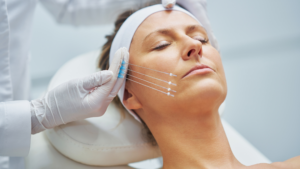
There are 3 different stem cell-based treatments that we use for skin rejuvenation.
These are;
– Fibrocell(Fibroblast injection)
– SVF (Stromal Vascular Fraction)
– Stem Cells of Fat Cell Origin
Fibrocell Application
Recently, facial wrinkles that appear with age are a problem for all people, men and women. The causes of this skin problem are water loss in the skin, decrease in the amount of collagen and elastin. This problem can now be treated with tissue engineering techniques. Cell-based treatments are used in various fields and give good results. Fibroblast cell therapy in particular is successfully applied in dermatology and reconstructive medicine. The areas of use of fibroblast cell therapy include plastic surgery, wrinkle, burn and wound treatments.
In general, the regenerative effects of fibroblasts include:
– Ability to synthesize extracellular matrix components and thus improve skin texture,
– Matrix secretion, including collagen
– It plays a critical role in wound healing and tissue repair.
Application of Fibrocell:
- A tissue biopsy is taken from behind the ear or from the inside of the arm. This procedure is painless because the area is anesthetized locally beforehand.
- The sample taken is sent to the laboratory under aseptic conditions and put into production.
- After production, Fibrocell is applied to the desired area by injection.
- Fibrocell is produced using a method approved by the FDA.
The tissue sample is sent to the laboratory and the process of producing and multiplying Fibroblasts takes approximately 1 month. The first treatment is given one month later, and a total of 3 treatments are continued at one-week intervals.
What is SVF Therapy?
Stromal Vascular Fractionation (SVF) therapy is an advanced process that uses stem cells to treat many degenerative conditions. It is now used as a cosmetic treatment to reduce and erase the signs of aging. It is done by injecting stromal vascular fraction, which is rich in mesenchymal stem cells, under the skin. After the injection, SVF works to heal the skin by finding damaged skin cells and increasing collagen to make new skin. The result is smoother skin with fewer lines, wrinkles and added volume. There is no risk of allergic reactions to SVF treatment.
How is SVF Treatment Performed?
A small amount of fat is removed from the abdomen or legs with the help of cannulas. Then, mesenchymal stem cells and growth factors are separated from the fat cells and injected into the target area. The injected SVF works by adding volume to the skin and reducing fine lines and wrinkles. The treatment takes 3-4 hours in total.
What Happens After SVF Therapy?
There are two areas that need to heal after SVF treatment: the area where the fat tissue was removed and the area where the SVF was injected. We recommend that patients rest for a few days, but light activities can be performed. Normal activities can be resumed within a few days. Depending on where the fat was removed, intense exercise and other strenuous activities should be avoided for a week. Some results are seen immediately, but the full effects of SVF treatment are seen in approximately three to six months and last for at least two years.
Is SVF Therapy Expensive?
The cost of SVF treatment varies for each patient, depending on the amount or number of areas to be treated, how much fat is removed, and whether it is combined with other treatments.