

Skin Lesions
Skin lesions on the face or any part of the body can be a source of concern for all of us from time to time, or they can be disturbing due to their appearance, especially those on the face. Lesions seen on the skin can be of inflammatory origin, or they can develop from veins, the skin itself, skin appendages or subcutaneous tissues, or they can be caused by some systemic diseases.
These types of moles or masses can be removed in different ways depending on their structure. The most important criterion for such lesions is whether they are related to skin cancer. There are certain risk criteria for skin lesions in any part of the body. These are;
If the moles change color
If their edges are irregular
If they are growing gradually
If they cause color changes around them
If they cause complaints such as itching, pain, bleeding
If they start to bulge from the surface
If their numbers increase…
They should definitely be shown to a specialist.
What methods are used in the treatment of skin lesions?
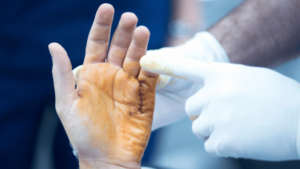
The most effective method for treating these types of lesions is surgical removal. Apart from this, depending on the lesion, there are options such as laser treatment, shaving, skin peeling, and radiotherapy. Local anesthesia is usually sufficient.
Will there be any scars after surgery?
Plastic surgeons remove these lesions in a way that is consistent with body lines and leaves the least amount of scarring. Of course, the degree of scarring varies depending on the location, character and size of the lesion. For the first 6-12 months after the operation, the removed area appears darker than normal skin and usually returns to normal skin color at the end of 1 year, largely disappearing in visibility. Sun protection is necessary during this period.
Do moles become dangerous if a knife touches them?
This is a completely misunderstood situation. A bad character mole should be removed including a certain healthy tissue on the skin. If it is not removed, it may reoccur or spread. However, not removing this lesion means allowing it to spread. It is not possible for a dangerous situation to occur after a harmless mole is removed. In this respect, such moles must be treated by an experienced Plastic Surgery specialist.
Do We Need to Protect Ourselves from the Sun? Does the Sun Cause Skin Aging?
Although doctors have known for nearly a century that sunlight contributes to premature aging, it is not easy to convince people of the dangers of sun exposure. The effects of chronic sun exposure on the skin can be easily seen when comparing the exposed skin of the face, hands or neck with the unexposed skin of the hips, inner thighs or inner arms. The sun is not the only source or cause of skin aging, but it is the main external cause.
There are two main processes of skin aging: intrinsic and extrinsic. Intrinsic aging reflects an individual’s genetic background and is inevitable and therefore beyond voluntary control. Extrinsic aging is caused by external factors. It occurs due to preventable causes such as smoking, excessive alcohol use, poor nutrition and sun exposure. This process is not inevitable and causes premature skin aging. The most important cause of aging in the facial area is sun exposure.
Intrinsically aged skin is smooth and without discoloration, it has lines but the normal geometric patterns of the skin are preserved. There is thinning of the upper (epidermal) and lower (dermal) layers of the skin.
Extrinsically aged skin is predominantly seen on exposed areas such as the face, chest, and outer surfaces of the arms. It is the result of the cumulative effects of a lifetime of exposure to ultraviolet radiation (UVR). Clinical findings of photoaged skin include freckles, patchy darkening (hyperpigmentation), wrinkles, and pigmented lesions and depigmented lesions.
A study in the United States showed that children prone to freckles developed 30% to 40% fewer freckles when they were treated with SPF 30 sunscreen. This study shows the importance of sun protection in preventing these pigmented lesions, which not only make the skin look older but are also known to be associated with an increased risk of melanoma. Other signs of skin aging include loss of thickness and elasticity, areas of purpura due to weakened blood vessels, and benign lesions such as keratosis, increased capillary vascularity (telangiectasias) and skin spots.
Photoaged skin also exhibits epidermal atrophy and distinct changes in collagen and elastic fibers. These changes in collagen and elastic fibers have been shown to worsen with continued exposure to sunlight.
How should sun protection be done?
It is well known that sun avoidance and sunscreen use are important aids in delaying aging. Sun avoidance is not always possible and is clearly not a popular behavioral adjustment for many people. However, avoiding unnecessary sun exposure and sunbathing, especially between 10:00 and 16:00, should be strongly recommended. Daily sunscreen use should be recommended, even if the patient is indoors. It should be reminded that UVA rays can pass through glass, so individuals are at risk of exposure to sunlight in their workplaces, as well as in their cars and homes. UVA filters can be placed on windows to provide some protection. Sun protective clothing such as wide-brimmed hats and SPF 45 clothing should be encouraged for patients who plan to be exposed to the sun for long periods.
Some Skin Lesions Seen in the Face Area
Although some skin lesions seen in the facial area are not related to cancer, they can cause serious complaints and discomfort.
Some of the more common ones are;
- Roza(Rosacea): Its main feature is permanent erythema (redness) seen in the convex areas of the face. Although it is more common in fair-skinned people, it can be seen in all races. It usually starts between the ages of 25-55. Rosacea is a cosmetically disturbing disease and causes depression in many patients. Non-irritating, anti-redness green foundations can be used to cover redness. Sun protection should be provided with sunscreens that block both UVA and UVB rays. Very hot, spicy foods should be avoided and alcohol consumption should be taken into consideration. Topical agents, oral medications and laser therapy are highly effective in treatment.
Rhinophyma: This strange disorder mainly accompanies long-standing rosacea, but rarely occurs as an isolated phenomenon and very rarely as a serious complication of acne. When complicating rosacea, there is no relationship between the severity of the condition and the severity of the disease. For some interesting reasons, it is largely limited to men.
Clinically, the disorder causes irregular thickening of the nose.
Dermabrasion offers a very effective solution in treatment.